Chlorinated Pesticide Remediation
What Are Chlorinated Pesticides and Why Are They a Problem?
Chlorinated pesticides, such as DDT, aldrin, dieldrin, chlordane, heptachlor, and endrin, were widely used historically in agricultural and residential applications due to their effectiveness and durability. Their chemical stability, however, results in extreme persistence, bioaccumulation, and toxicity in the environment, posing significant long-term risks to human health and ecosystems.
Once introduced into soil or sediments, chlorinated pesticides bind strongly to organic matter, becoming highly resistant to natural degradation. Their toxicity persists over decades, complicating site cleanup and regulatory closure.
Common Sites with Chlorinated Pesticide Contamination
Chlorinated pesticides are typically found at:
- Agricultural sites and orchards
- Pesticide manufacturing and formulation facilities
- Storage areas and legacy disposal sites
- Former residential areas treated for pest control
- Contaminated sediment deposits in waterways
Thermal Remediation: Highly Effective for Chlorinated Pesticides
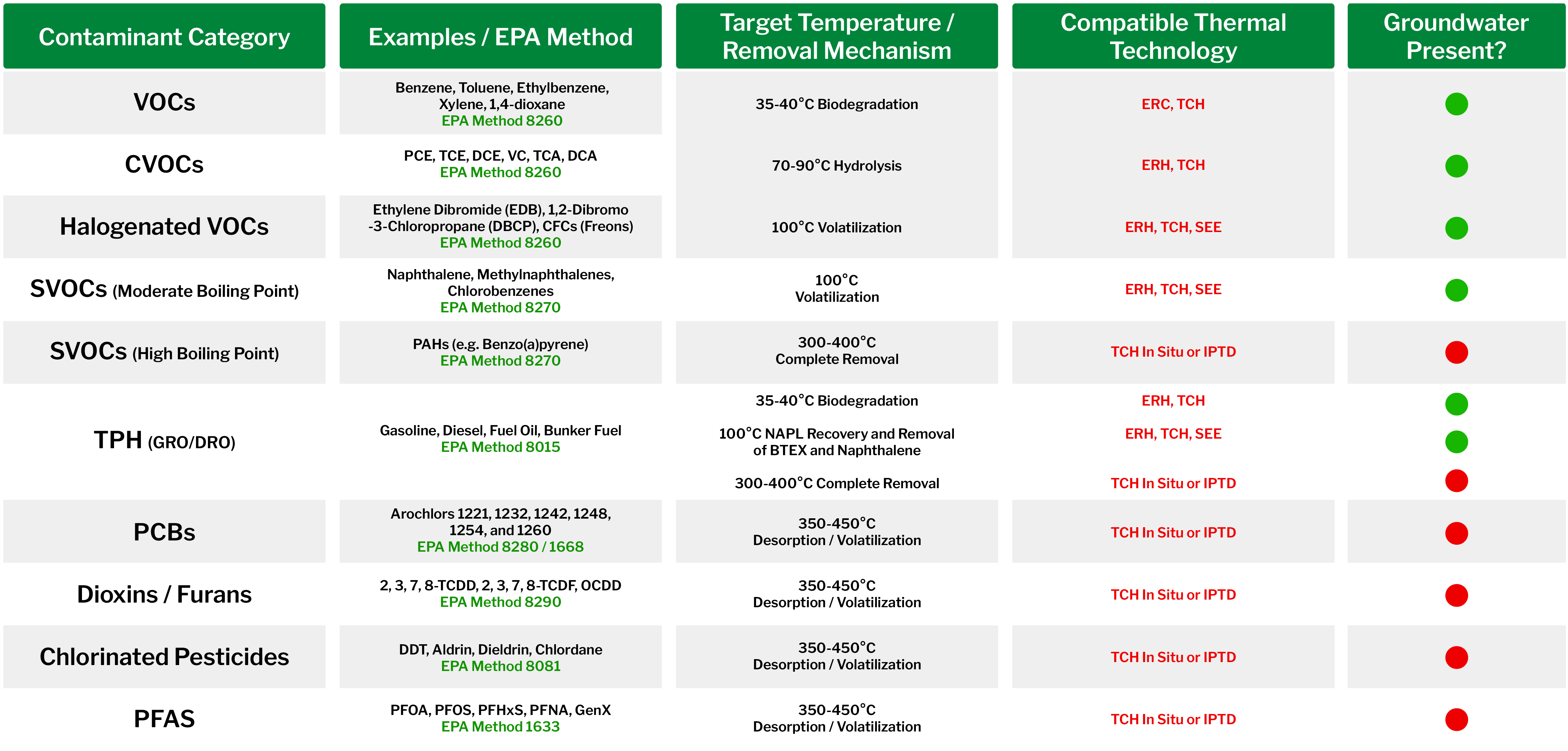
Traditional remediation methods often struggle due to the chemical persistence and strong soil adsorption characteristics of these pesticides. TerraTherm’s thermal remediation technologies overcome these barriers, providing aggressive, effective solutions by mobilizing and destroying contaminants at the source. Because of their high boiling points and structural stability, the soil and sediment impacted by chlorinated pesticides must be heated to high temperatures in the range of 350°C to mobilize, break down, and destroy these contaminants.
Our Solutions
Thermal Conduction Heating (TCH)
TCH is the only thermal technology that can heat soil and sediment to temperatures in the range of 350°C. Heating soil and sediment to these temperatures facilitates the volatilization and in situ destruction of chlorinated pesticides. TCH relies on thermal conduction of energy from a heater into the surrounding soil or rock. TCH provides highly uniform and predictable heating because the thermal conductivity of most sites only varies by a factor of 2 to 3. Vapor extraction wells are required to maintain pneumatic control and recover volatilized COCs during treatment
In-Pile Thermal Desorption (IPTD®)
IPTD uses TCH to provide ex-situ thermal remediation of soil and sediment that can treat any organic contaminant, including chlorinated pesticides, and streamlines material handling and eliminates the need for off-site disposal of contaminated soils and sediment.
IPTD is highly flexible and easily customizable to optimize treatment of any soil volume, large or small. It involves placing contaminated soil and/or sediment within an engineered above-ground, fully covered and insulated treatment pile structure, and then heating the soil to the required temperature to destroy and/or remove the contaminants over periods of several weeks to several months. The design temperature and treatment period depend on the contaminants and remedial goals. For treatment of soil contaminated with chlorinated pesticides, treatment temperatures of around 350°C are typically required.
IPTD is a good fit for shallow soil contamination, excavated soil, or IDW when off-site disposal is not an option. On-site IPTD can be a cost-effective option for the total treatment of contaminants like PFAS, PCBs, dioxins, TPH, PAHs, and chlorinated pesticides, which eliminates the long-term liability of disposal of the soil in a landfill. Importantly, stringent soil standards can be achieved even for recalcitrant contaminants like chlorinated pesticides.
IPTD has been used to treat soil volumes as low as 50 cy and up to 70,000 cy. The size of the pile depends on the volume of material to be treated, space available, electrical power available and desired schedule.
Will Thermal Work for Your Site?
Tell us about your site and we'll tell you whether thermal treatment applies and which approach fits. If it isn't the right remedy, we'll say so.
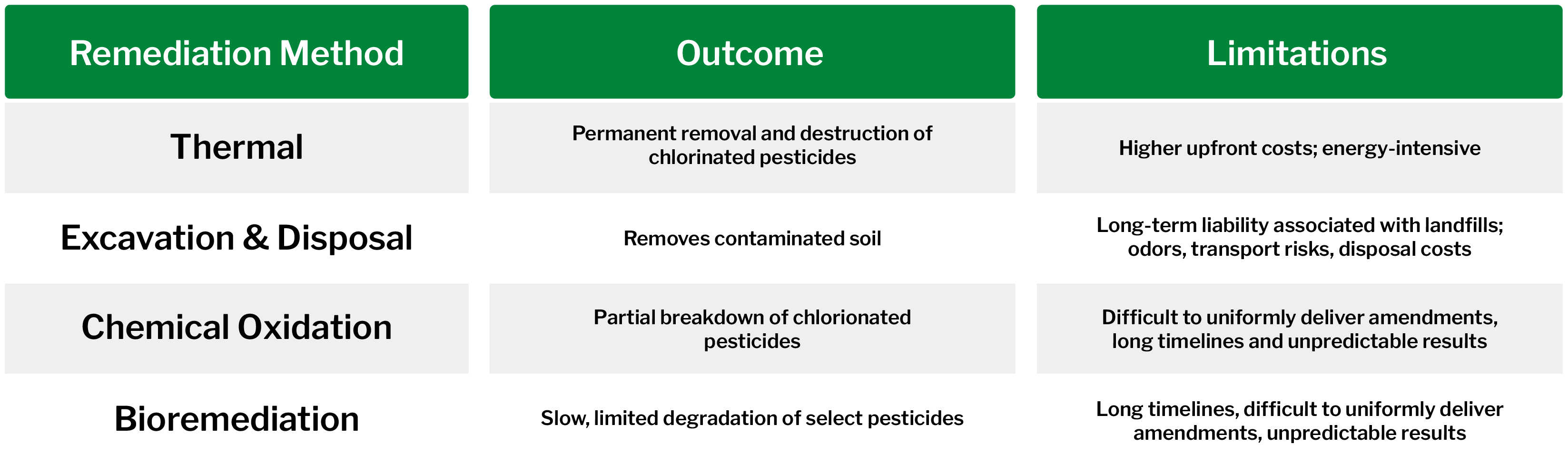
How Does Thermal Compare to Other Methods?
Choosing the Right Solution
TerraTherm evaluates key factors to design a tailored remediation approach:
- Contaminant concentration, distribution, and total mass
- Soil type, permeability, and organic content
- Depth and extent of contamination
- Presence of co-contaminants
- Regulatory cleanup requirements, timelines, and goals
TCH is ideal for deep, tight, or fractured bedrock zones and can heat treatment zones to temperatures required to treat the full range of organic contaminants (VOCs, CVOCs, SVOCs, PCBs, PAHs, PFAS, TPH, and chlorinated pesticides).
IPTD is optimal where high temperature treatment of high-boiling point, recalcitrant contaminants such as chlorinated pesticides is required.
Regulatory Trends and Cleanup Goals
USEPA SW846 Method 8081B is commonly used for analyzing chlorinated pesticides in environmental media. Regulatory oversight continues to intensify, emphasizing stringent cleanup goals to minimize health risks and ecological impacts. Thermal remediation is increasingly recommended by regulators for its ability to rapidly achieve permanent site closures.
Ready to Address Chlorinated Pesticides at Your Site?
TerraTherm provides proven, high-performance thermal solutions specifically tailored to tackle complex pesticide contamination. Our advanced technologies offer reliable, permanent remediation, facilitating compliance with stringent regulatory standards and significantly reducing long-term liabilities.
Talk to a Thermal Remediation Expert
Explore Our Chlorinated Pesticide Remediation Technologies:
TCH Technology Applicability